Trusted
Conveyancing
Solutions
Save up to 70% while making property transfers
simple, secure, and stress-free
What is Conveyancing?
Conveyancing is the legal process of transferring ownership of property from one party to another. It involves a range of legal, financial and administrative steps designed to ensure that the transfer is completed correctly, complies with all legal requirements and is formally registered in the Deeds Office. Whether you are buying your first home, selling a property, registering a bond or undertaking a large-scale property development, experienced conveyancing attorneys play a vital role in protecting your interests and ensuring a smooth transaction from start to finish.
Our Conveyancing Division delivers efficient, reliable support across all aspects of conveyancing and property law in South Africa. We work with private individuals, developers, estate agents, banks and commercial clients to manage property transfers, bond registrations and related processes accurately and proactively from instruction to registration. Whether the matter involves residential conveyancing, commercial property transactions or specialist notarial work, our conveyancing attorneys are focused on getting it done with clarity and care.

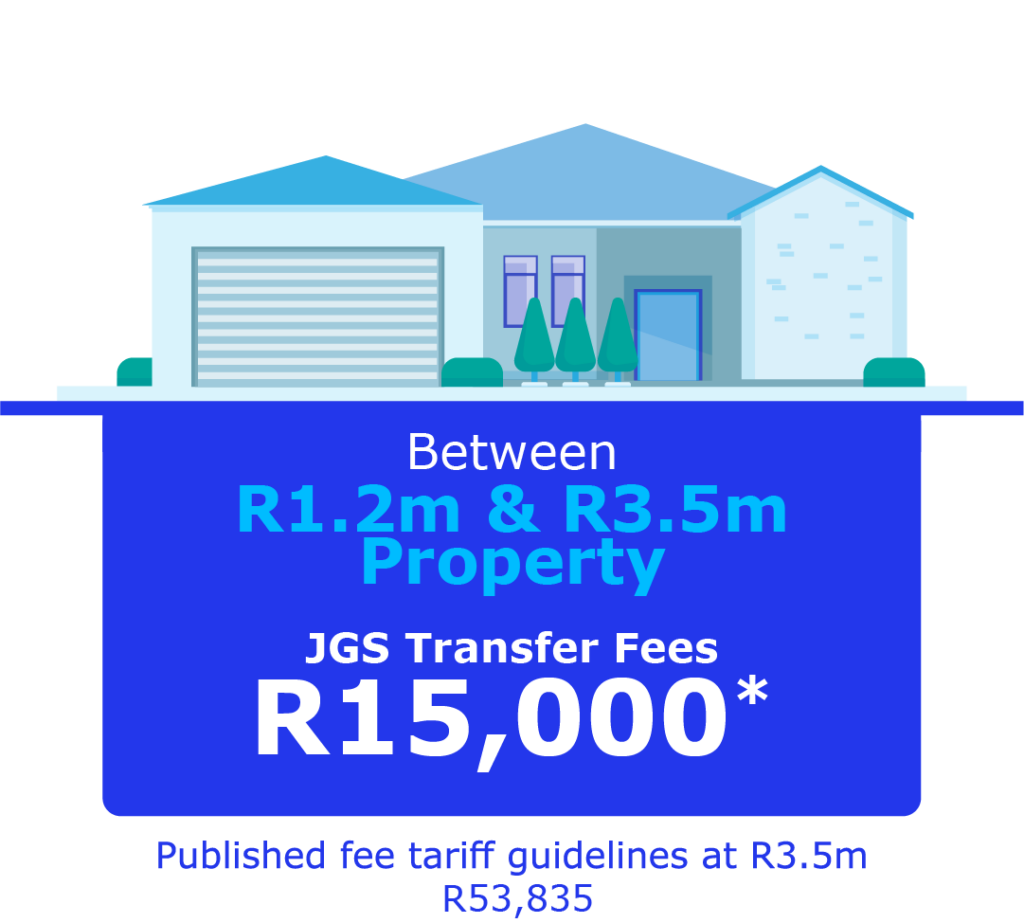
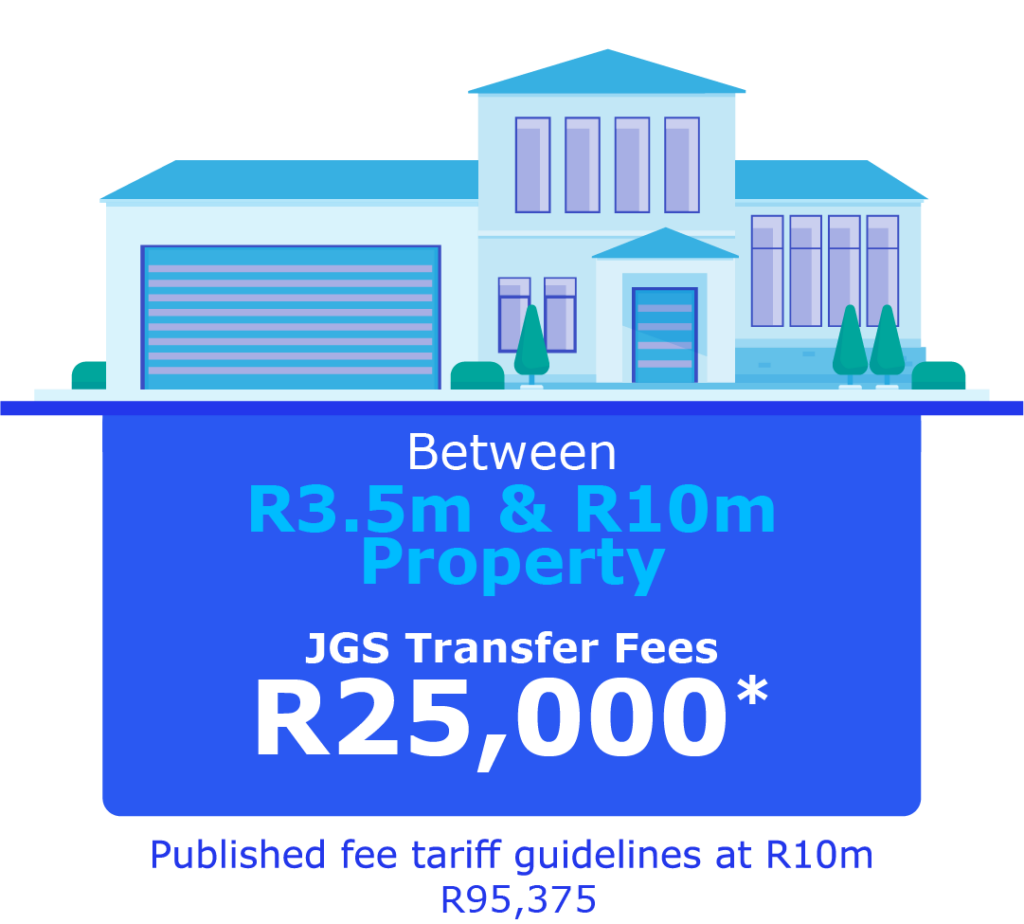
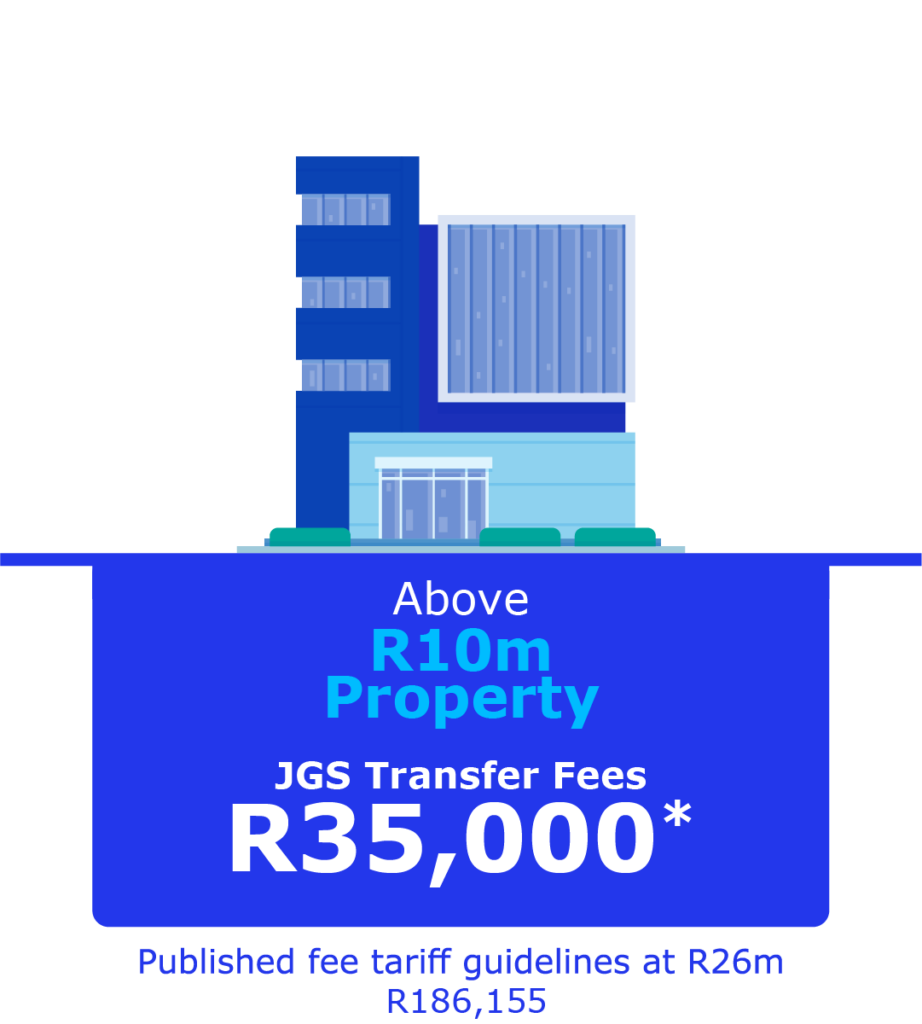
Excludes VAT, FICA and disbursements. T&C’s Apply*
Our conveyancy services
Residential & commercial property transfers
Mortgage bond registration & cancellations
Sectional title & homeowners’ association matters
Notarial deeds & servitudes
Property-related contract support
Registration of developments & property schemes
Estate-related conveyancing
Property law guidance for homeowners & corporates
Frequently Asked Questions
JGS will acknowledge receipt of the instruction by email or telephone. Confirmation will usually be sent to the seller, purchaser and agents.
JGS will provide a list of requirements, including all information and documents required to proceed, such as FICA documentation. FICA compliance is required by law and must be completed to avoid delays and possible penalties.
JGS will require the original title deed. If the property is bonded, the financial institution’s details and bond account number must be provided. Sellers should notify their bank as soon as possible of their intention to cancel the bond, as cancellation penalties may apply. JGS will provide the parties with a breakdown of the applicable costs. Cancellation figures will also be requested from the Nelson Mandela Bay Metropolitan Municipality; accordingly, all rates must be paid up to date. Where a deposit is required, payment must be made in terms of the agreement.
Any suspensive conditions, including bond approval or the sale of a prior property, must also be fulfilled. A suspensive condition must be fulfilled before the agreement becomes final. If it is not met within the required time frame, the agreement may become null and void.
JGS may therefore require an addendum where any time frames need to be extended.
JGS will commence drafting the transfer documents and arrange an appointment for signature. The required documentation will be explained during the consultation. The purchaser will receive a pro forma account for transfer costs.
Transfer and bond registration costs are separate accounts and may be payable to different firms. Parties should ensure that they understand the full financial implications; JGS is available to assist if required. Guarantees will then be requested to ensure that the purchase price and any seller’s bond cancellation amount are paid on registration. The transaction will also be submitted to the South African Revenue Service. Parties must ensure that their tax affairs are up to date. Transfer duty is exempt for properties sold below R1 250 000.00 and payable at the prescribed rate above that threshold.
Rates clearance figures will be requested, paid and obtained. Where applicable, levy clearance figures and Home Owners’ Association consent will also be obtained. All certificates required in terms of the agreement of sale must be obtained, including electrical, gas, electric fence and beetle certificates, where applicable. Once all requirements have been met, the conveyancer will sign the documents for lodgement at the Deeds Office. The lodging attorney will coordinate with all parties lodging simultaneously. Registration usually takes approximately 5 to 7 working days, depending on the Deeds Office turnaround time.
Upon registration, the purchaser may take occupation, unless otherwise agreed. Payment usually reflects the day after registration.